The environment your attention enters can shape whether starting feels light or heavy: your screen, your desk, your physical space. Before effort. Before intention. Before work itself.
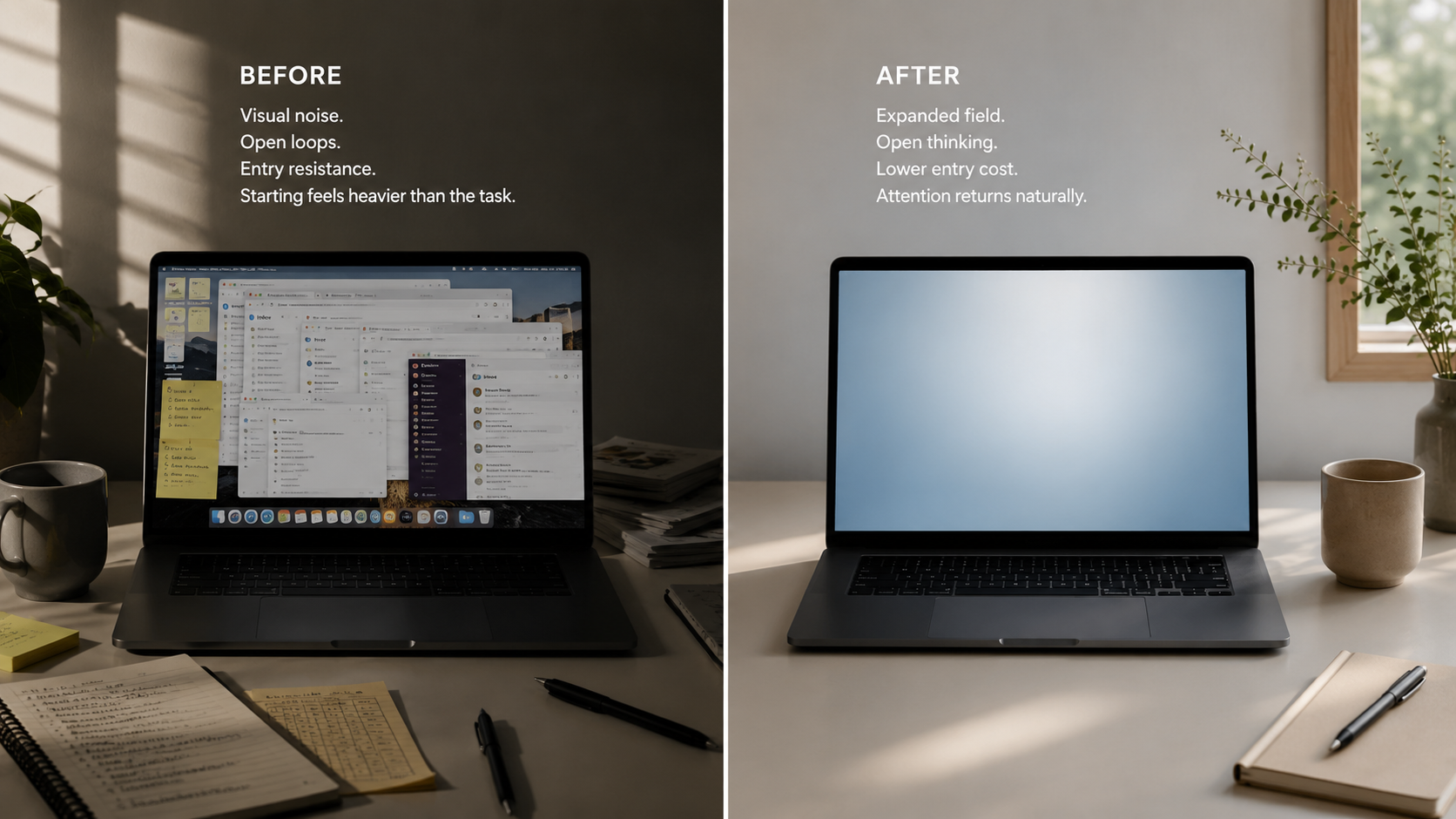
The problem is not you.
Most focus systems begin with behavior: habits, timers, motivation, discipline.
The difficulty appears earlier. At entry. The moment you sit down and open your screen, everything visible is already there. Open tabs. Desktop clutter. Unresolved files. Competing signals. VFA is built on the idea that this field matters before a single word is written.
When starting feels heavier than the work itself, it is not necessarily a sign of laziness. The environment may already be asking attention to work before work begins.
VFA approaches focus through the conditions around a task.
When focus is framed as a personal weakness, the solution becomes pressure. More effort. More discipline. More resistance.
When focus is framed as a design problem, the solution becomes structure. The visual field, everything visible in the environment where work happens, is one of the most immediate and modifiable conditions available.
Visual Field Architecture™ is a framework for designing that field deliberately.
Not decorating it. Designing it.
Three interventions. One system.
VFA does not ask you to try harder. It looks at the conditions you begin from.
VFA explores how the visual environment around a task can support attention and getting started.
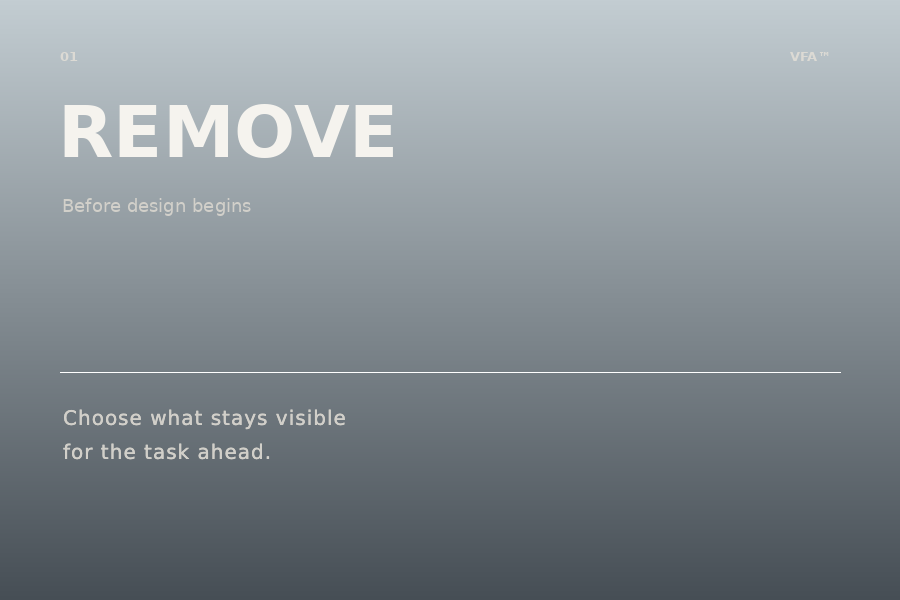
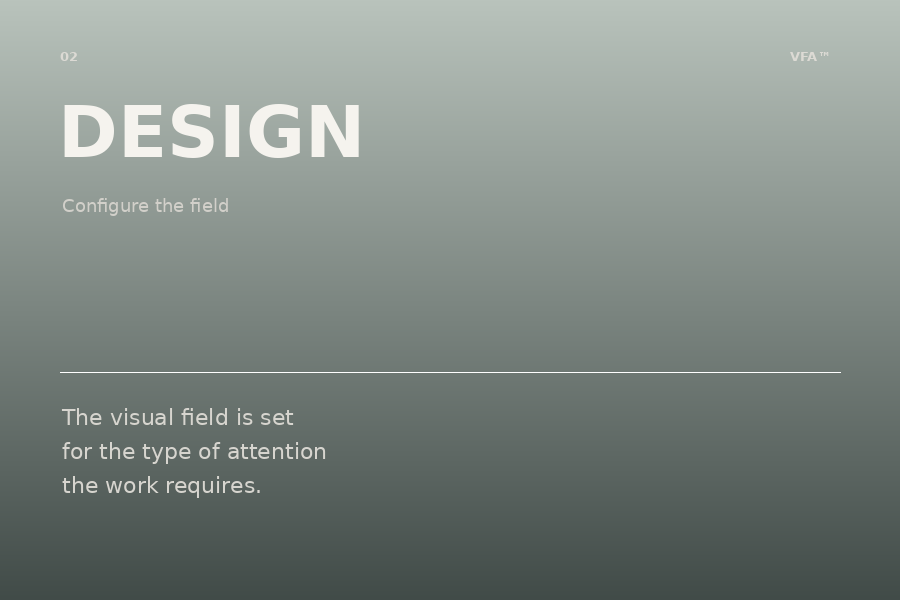
The Focus System — complete
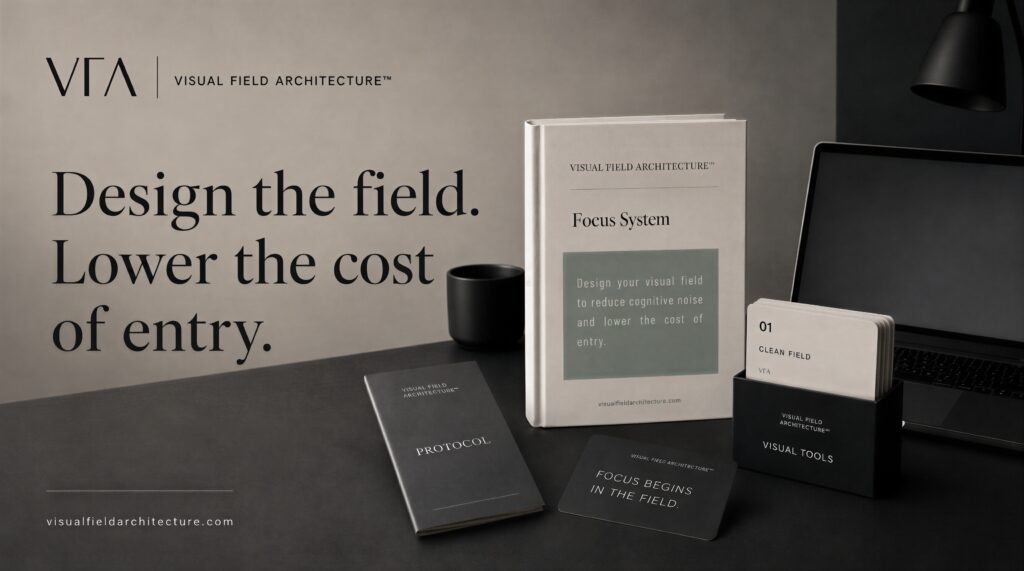
The Book
Focus System
Six modules. The complete framework. $12 value.
Visual Tools
Focus Pack Vol. 1
Visual fields designed for different work modes. Ready to use. $14.90 value.
Entry Protocol
Lock screen card
The daily transition cue. Bundle exclusive.
Total value: $26.90 — complete system: $22.90
For anyone whose work begins in a field.
Writers. Designers. Founders. Researchers. Strategists. Creators. Anyone whose attention enters work through a screen, a desk, a physical space they return to every day.
It is not for people who need more pressure to focus.
It is for people who need better conditions to begin.
The conditions around a task are worth examining, alongside the task itself.
Design it once. Let it carry the load.